


What does it mean to be a Christ-centred church in the Archdiocese of Perth?
That was the fundamental question posed to the recently commissioned Diocesan Pastoral Council (DPC) for the Archdiocese of Perth who gathered on Saturday 4 July to commence their journey of listening, discussing, discerning and contributing to the shared mission of the Church.
Comprising clergy, religious and lay representatives of the Church, the role of the consultative council is to advise the Archbishop on pastoral matters.
The inaugural meeting, held at the Salvatorian Spirituality Centre in Currambine, was facilitated by Dr Debra Sayce, Chief of Mission Enhancement and Outreach for the Archdiocese.

To help facilitate the discussions, Vicar General, the Very Rev Fr Vincent Glynn, introduced the members to Conversations in the Spirit – a structured method of prayer, listening and reflection that will underpin the Council’s work.
While acknowledging that aspects of the process can be challenging, Fr Vincent encouraged participants to share their faith, gifts and lived experiences in contributing to the goals of the Council.
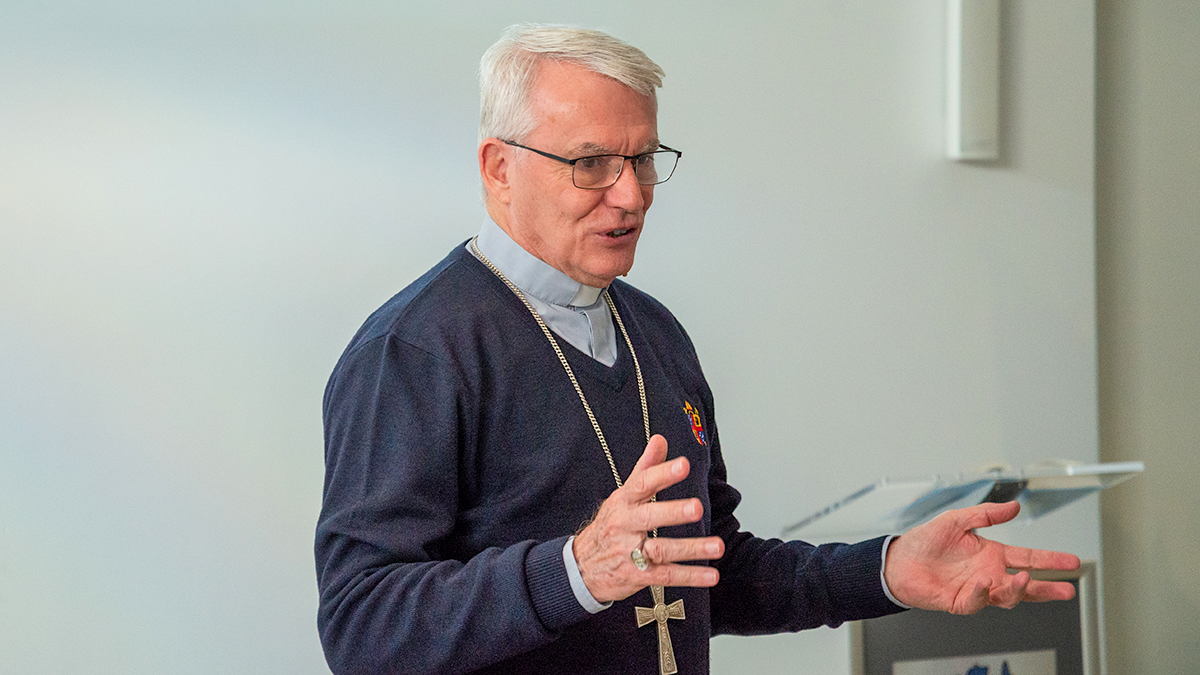
Challenging the group even further in his first of two presentations, Archbishop Timothy Costelloe SDB posed the questions, What do you think God is asking of us, the Church in Australia, at this time? How is He calling us to be a Christ-centred Church?
Focussing on the Church’s call to become more deeply Christ-centred through synodal discernment, Archbishop Costelloe suggested the Council’s primary purpose was not simply governance, but spiritual discernment in service of the mission of the Church.

Referring to Pope Leo XIV’s repeated affirmation that synodality must become “the permanent style of the Church,” he told the members they had been called to listen attentively to the Holy Spirit, discerning together what God is asking of the Church in Perth today.
Christ, he said, must remain the foundation of every aspect of the Council’s work.
Echoing the message he has proclaimed since becoming Archbishop, he challenged members to “restore Christ to the Church and restore the Church to Christ.” This, he said, was an ongoing call to personal and communal conversion and “an invitation to which the Lord looks to us for our response.”
To further articulate what it means to be a Christ-centred Church, Archbishop Costelloe reminded the members of the six key themes that emerged from the Plenary Council that call the Church to be: missionary and evangelising; inclusive, participatory and synodal; prayerful and Eucharistic; humble, healing and merciful; joyful, hope-filled and servant-hearted; and open to conversion, renewal and reform.
He suggested these themes should continue to shape the Council’s discernment in the years ahead.
Concurrently, Archbishop Costelloe said the members faced the important question, “What face of God do we allow to shine through in the Church?”
He explained that authentic Christian leadership requires continually returning to the Gospel and ensuring that every decision reflects the mind of Christ rather than personal preferences or assumptions. Practical considerations such as financial stewardship and accountability remain important, he said, but must always be guided by the Church’s deeper mission.

In concluding his address, Archbishop Costelloe urged the Council members to approach their responsibilities with humility, openness and a willingness to keep learning. Faithful discernment, he said, requires ongoing conversion, deep familiarity with Christ in the Scriptures and the Church’s tradition, and openness to wherever the Holy Spirit leads the Archdiocese of Perth.
Prayerfully seeking God’s will
Christian discernment as the heart of synodal leadership was the focus of Archbishop Costelloe’s second address during which he reiterated that the role of the Council was not simply to discuss issues, but to prayerfully seek God’s will through listening, reflection and openness to the Holy Spirit.
Reflecting on the participant’s first experience of Conversations in the Spirit, Archbishop Costelloe explained it was also central to the work of both the Australian Plenary Council and the Synod on Synodality.
While acknowledging that the process may initially seem formal or unfamiliar, he said its purpose was to form the Council into a true discernment body – “a community of disciples who together seek to discover just what God is asking of us at this time in our Archdiocese.”
Drawing on Scripture and the teachings of the Second Vatican Council, Archbishop Costelloe said discernment was the ability to “read the signs of the times” in the light of the Gospel.
Rather than simply responding to contemporary events or cultural trends, Christians are called to scrutinise them prayerfully, allowing the Gospel to shape their understanding and guide their response. Authentic discernment, he said, requires transformed hearts and minds that continually seek the will of God rather than conforming to the values of the world.
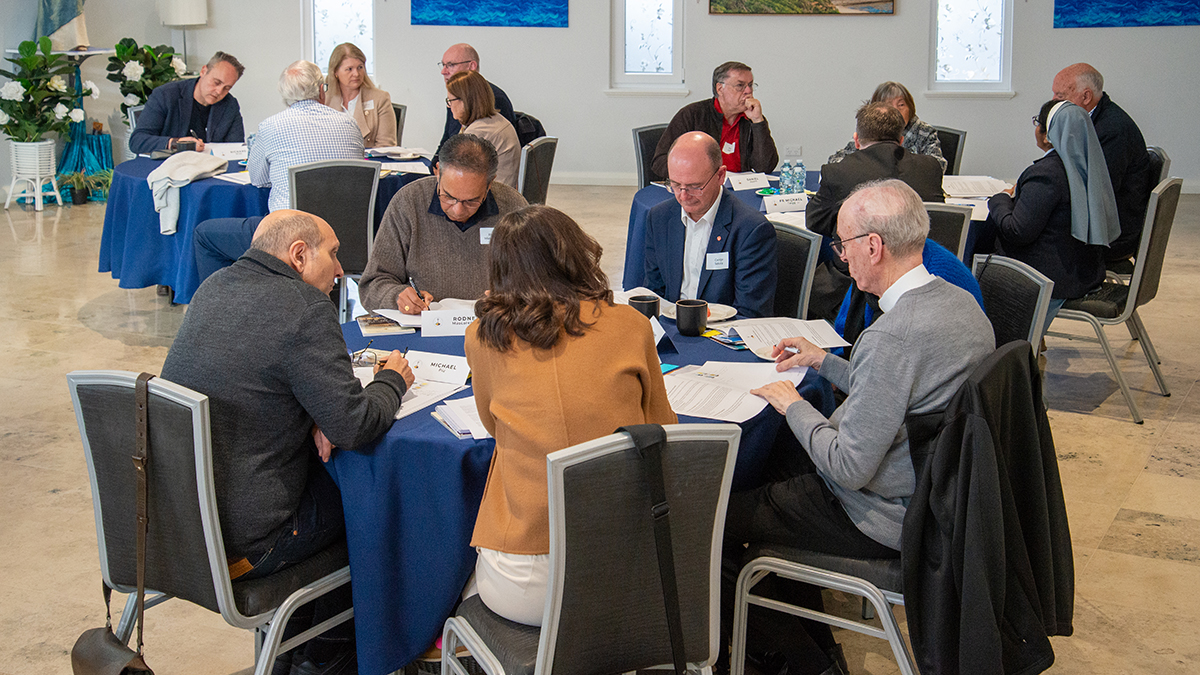
Another important consideration, he continued, was the notion of ‘deep listening.’
Echoing the teachings of both Pope Francis and Pope Leo XIV, Archbishop Costelloe said a synodal Church must be a listening Church – one that listens to the Word of God, the People of God, and the signs of the times. This listening is rooted in the shared dignity of baptism, recognising that the Holy Spirit can speak through every member of the Church while remaining grounded in Sacred Scripture and the Church’s living Tradition.
To further illustrate what faithful discernment means, Archbishop Costelloe used the analogy of a juggler keeping three objects in the air – Scripture, the living Tradition of the Church, and the realities of the contemporary world. None, he suggested, can be neglected if the Church is to discern faithfully what God is asking of it today.
In closing, Archbishop Costelloe introduced the group to ‘non-defensive listening,’ which he described as the essential attitude for Conversations in the Spirit.
True listening, he said, requires patience, humility and openness, resisting the urge to formulate responses while others are speaking and trusting that the Holy Spirit may speak through any person, even when views differ.
Such listening fosters genuine discernment, deeper communion and an ever-growing understanding of the faith; qualities, he said, that would equip the Diocesan Pastoral Council to fulfil its mission with wisdom, humility and hope.
The formation of the Diocesan Pastoral Council is a direct response to the Australian Plenary Council and the Synod on Synodality.
Members of the Council include Wayne Bull, Michelle Carrick, Karen Hart, Lourdes Has, Daniel Hewitt, Robert Hicks, Lauren Italiano, Sr Chitra Justin, Anne Mahony, Rommie Masarei, Rodney Mascarenhas, Richard Miles, Tara Peters, Dr Francesco Piccolo, Michael Piu, Catherine Rice, George Sekulla and Fr Michael Twigg OMI. Auxiliary Bishops Don Sproxton and Nelson Po, Fr Vincent Glynn and Dr Debra Sayce (Ex-Officio) also form the membership. Members serve a three-year term.
The Diocesan Pastoral Council was commissioned at a Mass celebrated by Archbishop Costelloe on Sunday 5 July at St Mary’s Cathedral.