

The University of Notre Dame Australia has announced four Transformative Research Fellowships for 2026, supporting research that improves lives and contributes to the common good.
The Transformative Research Fellowships are a flagship initiative of the University’s Research Strategy that invests in promising researchers to build Notre Dame’s research capability.
Transformative Research Fellows are awarded an additional 20 percent research allocation for twelve months and are supported at the University’s research institutes.
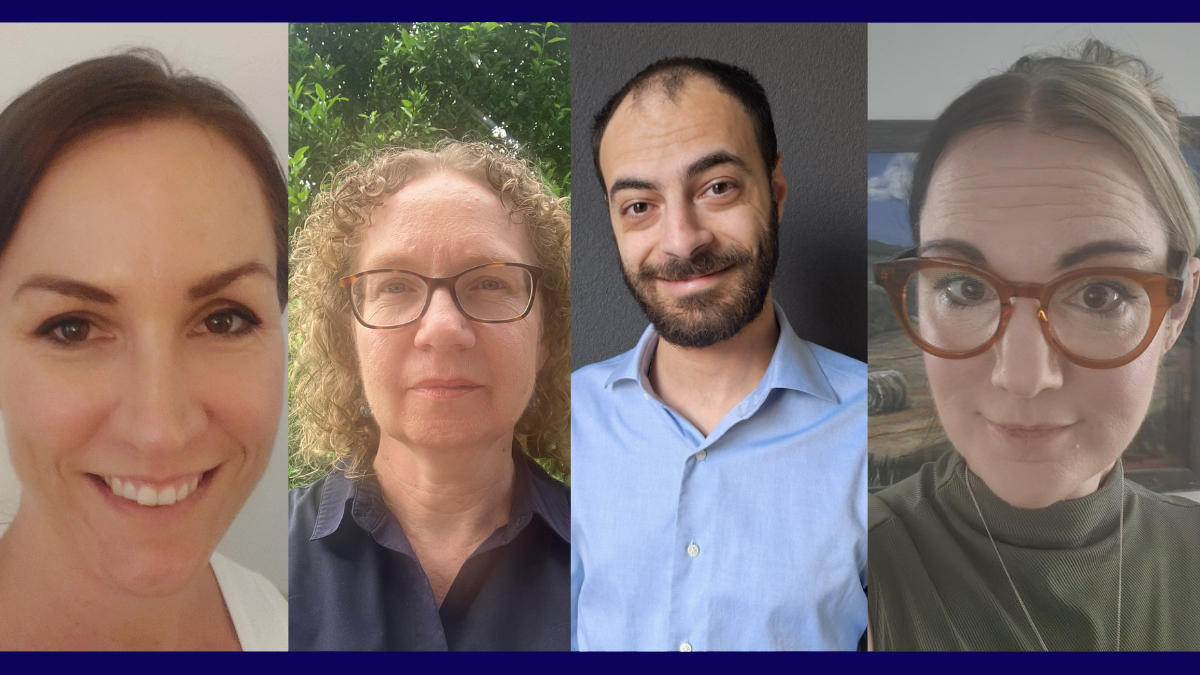
Conducting intellectually significant projects with real-world impact and research that addresses real world challenges, improves the lives of people, and impacts society for the common good, the 2026 Notre Dame Transformative Research Fellows comprise:
Dr Denise Buiten (School of Arts & Sciences): Victim-survivors’ experiences and perspectives of contemporary news reporting on domestic and family violence, and their implications for justice and recovery.
This project explores how domestic and family violence survivors engage with current affairs news reportage. It is co–designed with the WEAVERS at the Safer Families Centre to improve research outcomes and ensure a safe research culture, while promoting a media landscape that is also safe and supportive for those who have survived domestic and family violence.
Dr Lauren Bloomfield (School of Medicine): Assessing Immunisation Coverage and Vaccine-Preventable Disease in People Experiencing Homelessness in Western Australia.
This project uses linked health data to help understand how well people experiencing homelessness in Western Australia are protected against vaccine-preventable diseases.
“This fellowship allows me to focus on populations who are often invisible in routine datasets,” Dr Bloomfield said. “I’m excited to work with the Institute for Health Research and the Home2Health team to translate complex linked data into evidence that can improve public health.”
Dr Kate Naidu (School of Education): (De)constructing categories of disadvantage in Learning Abroad education in Australia.

This project considers the way we think about advantage and disadvantage in Australia in relation to participation in learning abroad experiences. These categories will be identified and critically interrogated, and educators who lead learning abroad programs will be interviewed to understand their perspectives on participation, diversity and equity.
Dr Sam Kaldas (School of Philosophy & Theology): Women Platonists in Early Modern England: Conway, Masham and Astell on Love, Reason and Autonomy.
This research asks how the seventeenth-century women philosophers Anne Conway, Damaris Masham and Mary Astell were influenced by the Cambridge Platonists, exploring the relationship between their Platonism and their Christian faith, and focusing particularly on their pioneering arguments for women’s education and intellectual equality. It will help us understand how early modern philosophy re-conceived the idea of the soul, the inner self, the gendered self, and the nature of reason.