

By Joel Hall

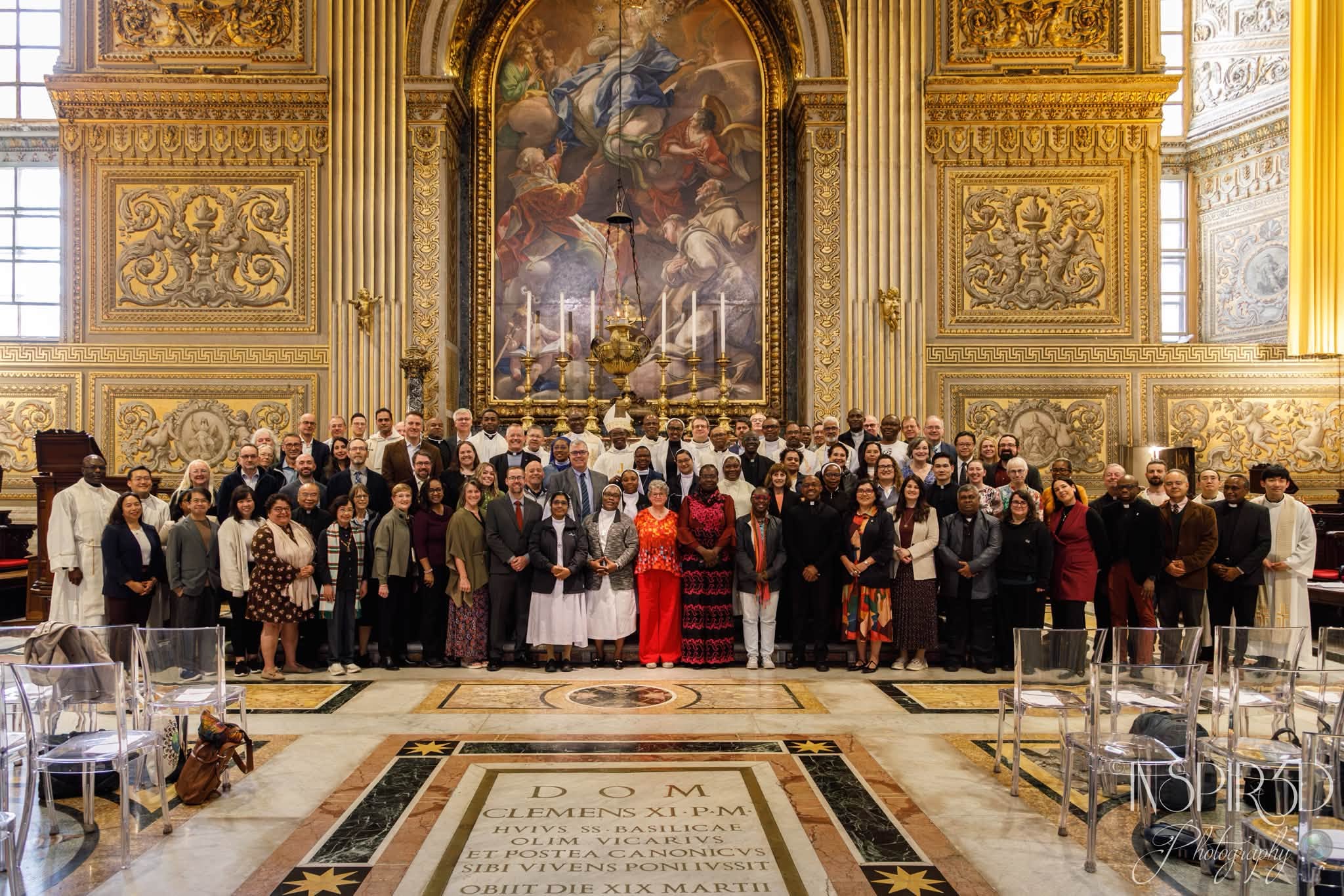
Australian Catholics have reflected on their experience at the Vatican’s first ‘Church of the Sheaves’ conference.
Taking its inspiration from Psalm 126, “where those who sow in tears shall reap with joy”, the initiative aims to renew the Church’s missionary approach through the vesture of mutuality and cooperation as opposed to paternal assimilation.
Held at the Pontifical Urban University in Rome, the conference consisted of Religious, Clerics, lay pastoral workers and academics from every continent.
Perth’s own, Servite Sister Chitra Justin MSSM was one of three Australian representatives who attended the conference. She said she was humbled to participate in the missionary initiative.
“I consider it a great blessing to work together in a synodal way: sharing, listening to one another, and discerning what God is calling each local Church to offer to the global Church,” Sr Chitra said.
The Conference took its focus from an aspect of the vision outlined in the final document from the Synod on Synodality, with the aim of emphasising the Catholicity of the Church.
Each jurisdiction was called to “share its own resources in a spirit of solidarity, without paternalism or subordination, with respect for diversity and promoting healthy reciprocity.”


Sister Chitra linked this goal back to Psalm 126 saying the Church hopes to be “a living exchange of gifts between older and younger Churches, near and far.”
Because of the increasingly secularised and globalised world the Church finds herself in, Archbishop Fortunatus Nwachukwu, Secretary of the Dicastery for Evangelisation, opened the conference saying the Church must “move beyond a model of mission which flows in one direction: every local church has gifts to give and gifts to receive.”
Describing this as Gift Exchange, he said mission should be from “everywhere to everywhere” and emphasised the responsibility that lay Catholics share in creative ways of evangelising wherever they find themselves in this dynamic world.
“The places where we serve and the people with whom we are called to share in mission are constantly evolving. We need to think outside of old boxes and categories,” he said.
According to the press release for the conference, Gift Exchange refers to the paradigm in which mission fields and ecclesial jurisdictions are seen as capable of both giving and receiving in light of their respective strengths and weaknesses.

Another Australian attendee was Dr Philip McCosker, Research Fellow in Religion and Theology at Australian Catholic University. He said Gift Exchange contrasted with an understanding of mission as from ‘the West to the rest’ since God acts through all creation.
“This means all members of the church are missionaries, and it also means we need to listen to as many voices as we can, both within and without the church,” Dr McCoosker said.
When discussing the prevailing approach to mission in the 18th and 19th centuries within an Australian context, Dr Philip said the most effective missions to Australian Indigenous people sought to inculturate rather than “impose uniformity without regard to local realities”.
“When God became human, God did not replace humanity but liberated creation,” he said.
This paradigm shift within the Church’s missionary approach coincides with a demographic shift as half of the world’s Catholics are projected to be in Africa by 2066, whilst Catholicism in Europe, North America and Oceania is still declining.
Sister Chitra added to this by saying Gift Exchange “calls us towards a sacramental vision of unity and renewal, where mutual sharing, openness and the recognition of one another’s gifts become sources of transformation.”
“Such a vision has the potential to contribute to the healing and transformation of a wounded and divided world.”