


Margaret Atwood’s Gilead has never felt more timely, or more uncomfortable.
The Testaments, which premiered on Hulu on April 8 and is streaming now on Disney+ internationally, picks up the world of The Handmaid’s Tale roughly four years after the original series concluded — and it does so with enough intelligence and restraint to justify its existence, even if it doesn’t always trust itself enough to fully break free of its predecessor’s shadow.
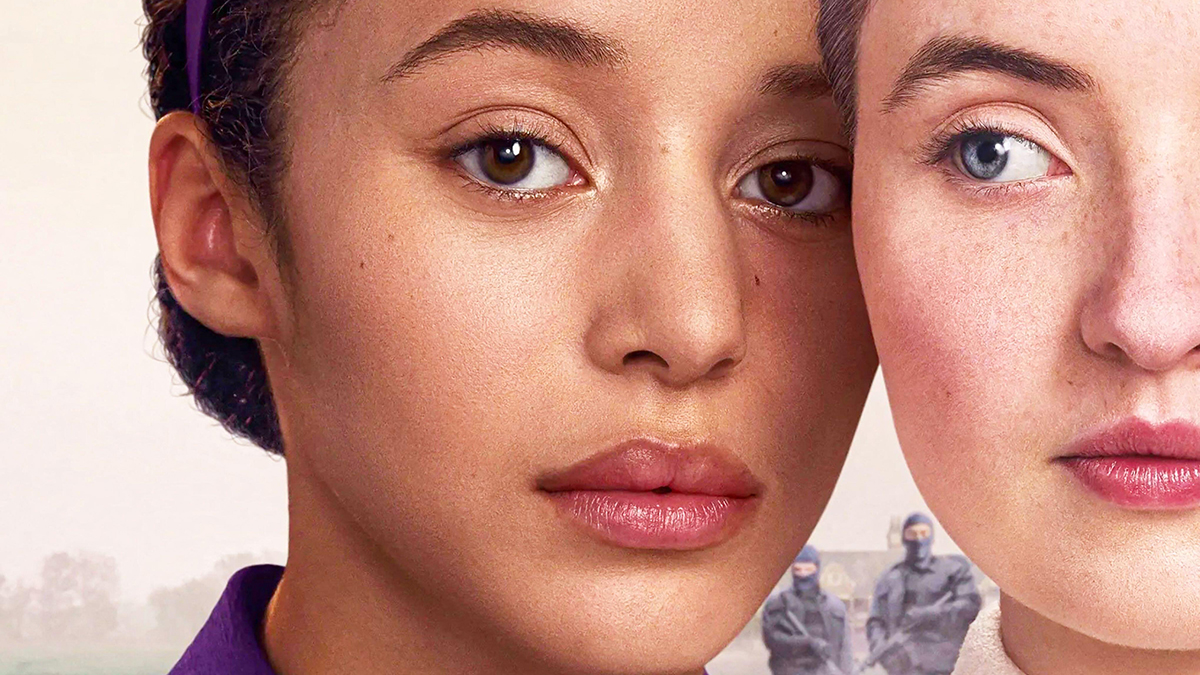
The series centres on Agnes MacKenzie, played by Chase Infiniti, the biological daughter of June Osborne — the Handmaid at the heart of the original story — raised within Gilead’s elite with little memory of the life she was taken from.
Agnes attends a preparatory school run by Aunt Lydia, where obedience is the curriculum and marriage to powerful, much older men is the graduation prize.
Her world is shattered — quietly, then decisively — by the arrival of Daisy, played by Lucy Halliday, an outsider who grew up in Canada and has been living a normal life before being drawn into Gilead’s orbit.
Infiniti is a genuine discovery. She carries Agnes’s interiority with remarkable economy, communicating the particular torment of a young woman who has been trained not to know what she is missing.
Many of the plot beats are deeply familiar — the girls get jealous of one another’s successes, have crushes they shouldn’t, and stress about meeting the expectations of others — and Infiniti grounds these moments in something truthful rather than melodramatic.
Halliday brings necessary friction as Daisy, her outsider’s horror at Gilead functioning as the audience’s conscience when the girls raised inside it can no longer see the bars of the cage.
The ensemble around them is strong: Rowan Blanchard as Shunammite, who comes from a powerful family and fully benefits from Gilead, and Mattea Conforti as Becka, Agnes’s closest friend, both add texture to what could easily have been a flat chorus.
Then there is Ann Dowd. Dowd is, as one critic put it, next level — compressing and occasionally revealing all that Aunt Lydia has been through, making her simultaneously Dorian Gray and his portrait. She remains the series’ moral fulcrum, a woman who built this system and now, perhaps, questions whether it can survive her. Every scene she inhabits carries weight she hasn’t had to earn in the room because she earned it across eight prior seasons. Her presence is both the show’s greatest asset and its most honest acknowledgement that it still needs the original to stand.
The directors — Mike Barker, Shana Stein, Quyen Tran, and Jet Wilkinson — handle the material with care, and Barker’s opening three episodes set a tone that is brighter in palette than The Handmaid’s Tale without sacrificing dread.
Visually, The Testaments steps into the light — the crimsons replaced by purples and greens, the colour-coded hierarchy of Gilead’s girls rendered with a painterly precision that occasionally tips into the gorgeous.
The costumes and choreography are once again exceptional, and there are numerous truly beautiful scenes, particularly a tea party sequence in which the girls perform docility for the Aunts while the camera watches from a distance that feels like surveillance.
The Hollywood Reporter’s criticism that the show should feel younger and more distinctly female-fronted than it does has some merit — the visual grammar is still prestige drama rather than something genuinely new — but the craft is never in doubt.
Composer Adam Taylor returns from The Handmaid’s Tale, and his score carries over the same minimalist, tension-forward blend of orchestral elements and synthesisers that made the original so atmospherically oppressive.
The needle-drops are used with more deliberate irony here. Blondie’s “Dreaming” plays as Agnes rides a bus; The Cranberries’ “Dreams” scores the episode’s final moments as two worlds — Gilead’s silence and the outside’s noise — are held in contrast.
The score can feel jarring as it moves between a bubbly brightness and something darker, but I suspect that tonal instability is intentional. This is a story about girls who have been taught that their cage is a palace, and the music knows it before they do.
The Catholic viewer will find in The Testaments something that demands engagement rather than dismissal.
Atwood’s Gilead is a theocracy, and the series does not flinch from depicting how religious language and structures can be weaponised to enforce submission.
That critique is real, and the faithful are not exempt from sitting with it honestly.
What the show also makes visible — if you’re willing to look — is the counterfeit nature of Gilead’s religion: its God demands obedience without love, sacrifice without dignity, formation without truth. That is not faith. It is control wearing faith’s clothing, and the distinction matters.
The series currently holds an 88 per cent approval rating on Rotten Tomatoes, with critics noting it as a slow-burning world builder that features an excellent cast of fresh talent.
The Testaments is not a reinvention, but it is a worthy continuation — thoughtful, well-acted, and made with enough genuine craft to earn the weight of what it’s carrying.
The Testaments streams on Disney+ in Australia. New episodes release weekly, with the finale airing May 27.