

Eric Besnard’s Jean Valjean is a quiet, intimate reimagining that trades the grand scale of Les Misérables for something far more personal and reflective.
Set against a beautifully captured countryside, the film uses its natural landscapes not for spectacle, but as a backdrop to a deeply human story about judgment, faith, and the possibility of change.
It sits comfortably alongside Besnard’s previous works such as Delicious and A Great Friend, continuing his signature approach of crafting thoughtful, feel-good films that quietly explore human relationships, often set against historical backdrops, with a gentle mix of warmth, humour, and heart.

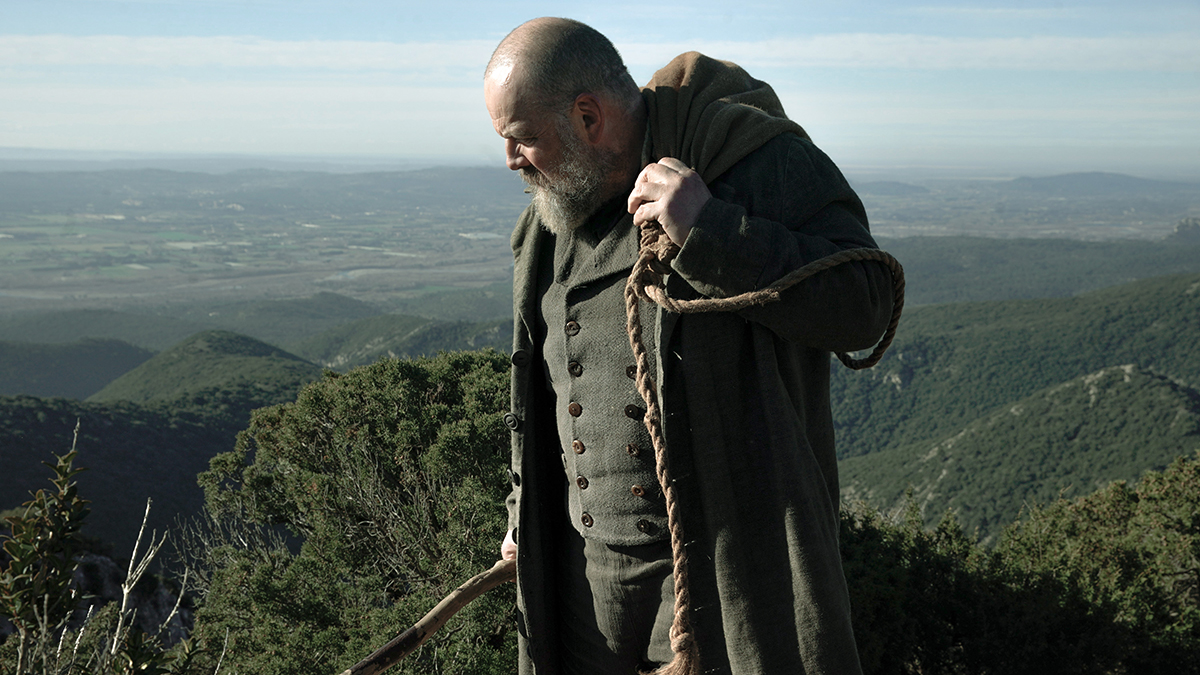
At its centre is Valjean (Grégory Gadeboi), portrayed not as a heroic figure from the outset, but as a hardened, almost unlikeable man, someone who has lost hope and expects nothing from the world but cruelty.
Besnard leans into this discomfort, allowing the audience to sit with a protagonist who feels closed off and defined by bitterness. It’s this emotional distance that makes the film’s turning point so effective.
The encounter with Myriel (Bernard Campan), subtly revealed to be a man who has renounced status and comfort to serve others, is where the film finds its moral and spiritual weight. Their conversations, often simple and grounded, carry a quiet philosophical depth.
Through acts of unexpected compassion, the priest challenges Valjean’s rigid worldview, introducing him to a form of humanity he has never known. The film doesn’t rush this transformation, instead unfolding it through moments of introspection, doubt, and confrontation with one’s own judgment.

Besnard weaves in themes of faith without heavy-handedness. Characters question belief as much as they embody it, and the idea of penance is explored not as punishment, but as a path toward understanding oneself.
The presence of familial ties, particularly through the sister figure, adds another layer, grounding the story in personal relationships while reinforcing the tension between moral law and human empathy.
What stands out most is the film’s critique of authority. There is a quiet irony in how law and order are portrayed. Institutions meant to uphold justice are shown as rigid and, at times, morally blind, while true compassion exists outside of them.
This contrast reinforces one of the film’s central ideas that judging others, especially by appearances or past actions, often reveals more about the judge than the judged.
Ultimately, Jean Valjean is a film about redemption, but not in a grand or triumphant sense. It is about the slow, uncomfortable process of confronting who you are and choosing, perhaps for the first time, to be something different.
Besnard handles this with restraint and sincerity, creating a story that feels less like a dramatic retelling and more like a meditation on hope, fragile, uncertain, but always present.
The Australian film classification is M – mature themes and violence.