


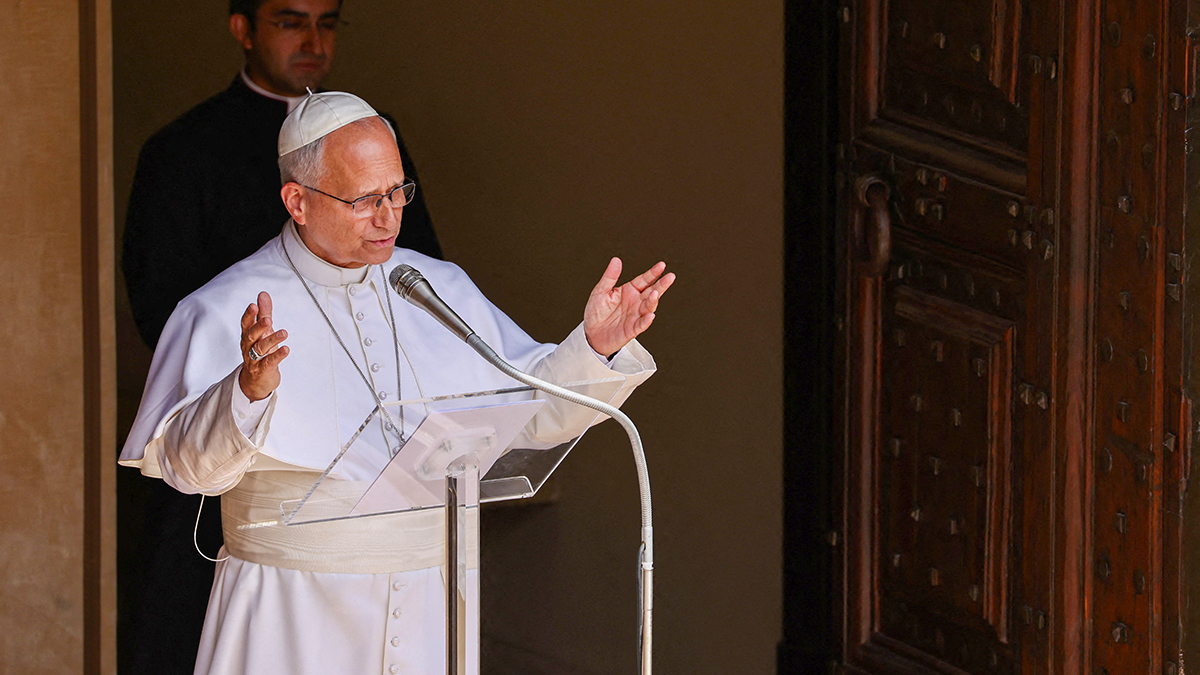
Pope Leo XIV has told pilgrims gathered at Castel Gandolfo, near Rome, that the Kingdom of God grows quietly through faith, patience and humble service.
Addressing the faithful during his 19 July Angelus address at Piazza della Libertà at Castel Gandolfo, Pope Leo reflected on the Parable of the Sower and the wheat, weeds, mustard seed and yeast in the dough to explain that God, rather than acting through force or domination, “favours smallness.”
Like the tiniest seed or a little yeast mixed into dough, God’s grace, he explained, transforms lives from within, often in ways that are not immediately visible.
This, he said, was a sign of God’s “discreet love, by which He leaves us free to accept or reject Him.”
Through the parables, Pope Leo said Jesus reveals something important about the manner in which God works.

The common Christian expectation that God will intervene dramatically or spectacularly to remove evil can shape an unhealthy understanding of the Church, he said, where success, influence or power become measures of faithfulness.
Instead, Jesus teaches the Kingdom is at work, even amid the presence of evil. Like the wheat growing alongside the weeds, goodness continues to flourish despite darkness. This calls Christians to avoid rash judgments, to exercise patience and to trust that God is continually at work, even when His presence seems hidden.
“The Kingdom of God spreads even amidst the weeds,” the Holy Father explained, inviting the faithful to train their spiritual vision to notice the quiet signs of God’s grace in ordinary life. The smallest acts of charity, moments of forgiveness and faithful daily witness all become places where God’s Kingdom takes root and grows, he suggested.
Quoting the then-Cardinal Joseph Ratzinger, later Pope Benedict XVI, Pope Leo reminded the faithful that “it is a matter of submitting ourselves to the logic of the seed” whereby rather than pursuing success or greatness, we make ourselves small in order to serve others.
Christians, he said, are called to become “small seeds of the Gospel” and “leaven of love that transform the dough of the world.”

Entrusting this mission to the Blessed Virgin Mary, Pope Leo asked the Mother of God – who welcomed the seed of God’s Word with humility and faith – to “sustain us on our journey and intercede for us.”
Following the Angelus, Pope Leo greeted the residents of Castel Gandolfo and welcomed pilgrims from around the world.
He renewed his appeal for prayer for all those suffering because of war and violence, asking the faithful to unite their prayers with every sincere effort to bring about peace.
Benedictine abbey visit
Prayers of peace were also at the heart of an unannounced visit that Pope Leo made to the Benedictine Abbey of Montecassino on 20 July where he prayed at the tombs of Saint Benedict of Nursia and Saint Scholastica located within the abbey basilica.

According to the Holy See Press Office, Pope Leo “paused to pray at the tomb of St. Benedict, entrusting to him his plea for peace in those regions of the world marked by bloodshed and conflict.”
He also joined the monks for prayer and lunch, toured the historic abbey and greeted and blessed delighted pilgrims who too were visiting the abbey.