


“Every person is unique and irreplaceable, a free and intelligent subject with a conscience, capable of seeking God, serving one another, caring for our common home.” – Pope Leo XIV.
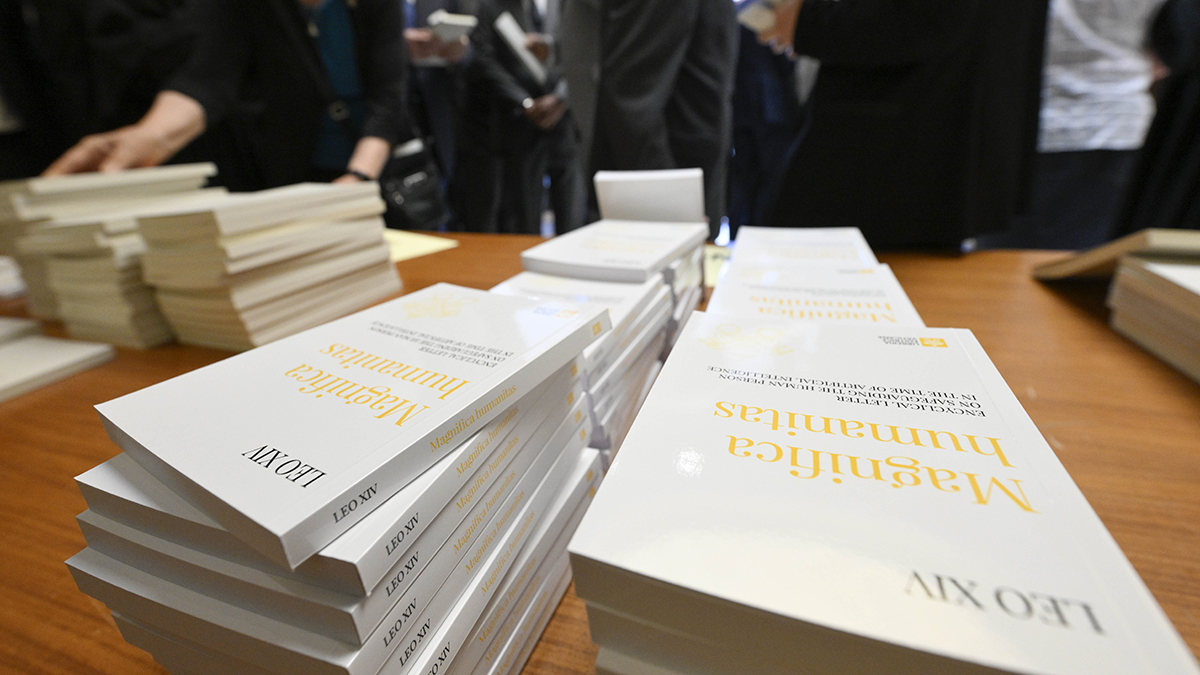
Pope Leo XIV has released his first teaching letter, an encyclical entitled Magnifica humanitas (“Magnificent Humanity”).
Addressed to all humanity, it is a reflection on what it means to protect and preserve human dignity in the age of artificial intelligence.
Pope Leo XIV signed Magnifica humanitas on 15 May – the 135th anniversary of the publication of Pope Leo XIII’s seminal encyclical Rerum novarum.
“The magnificent humanity created by God stands today before a decisive choice: to erect a new Tower of Babel or to build the holy city, where God and humanity dwell together,” the encyclical begins.
It sets out the contrast between a world founded on power and self-sufficiency and a path of shared responsibility and communion.
“Every human person is planned and willed by God to enter into communion with him, with others and with creation,” the document reads.

Every generation, it argues, is entrusted with the task of shaping its own time, yet every age faces the risk of building an inhuman and more unjust world.
“When human dignity is threatened by new forms of dehumanisation, ours is the pressing duty to remain profoundly human. We must lovingly safeguard the grandeur of humanity bestowed upon us, the splendour of which no machine can ever replace,” it says.
Bishops Commission for Life, Family and Public Engagement chair, Archbishop Peter Comensoli, said artificial intelligence was driving a new industrial revolution and it was important to address how this will challenge human dignity, work, family and the environment.
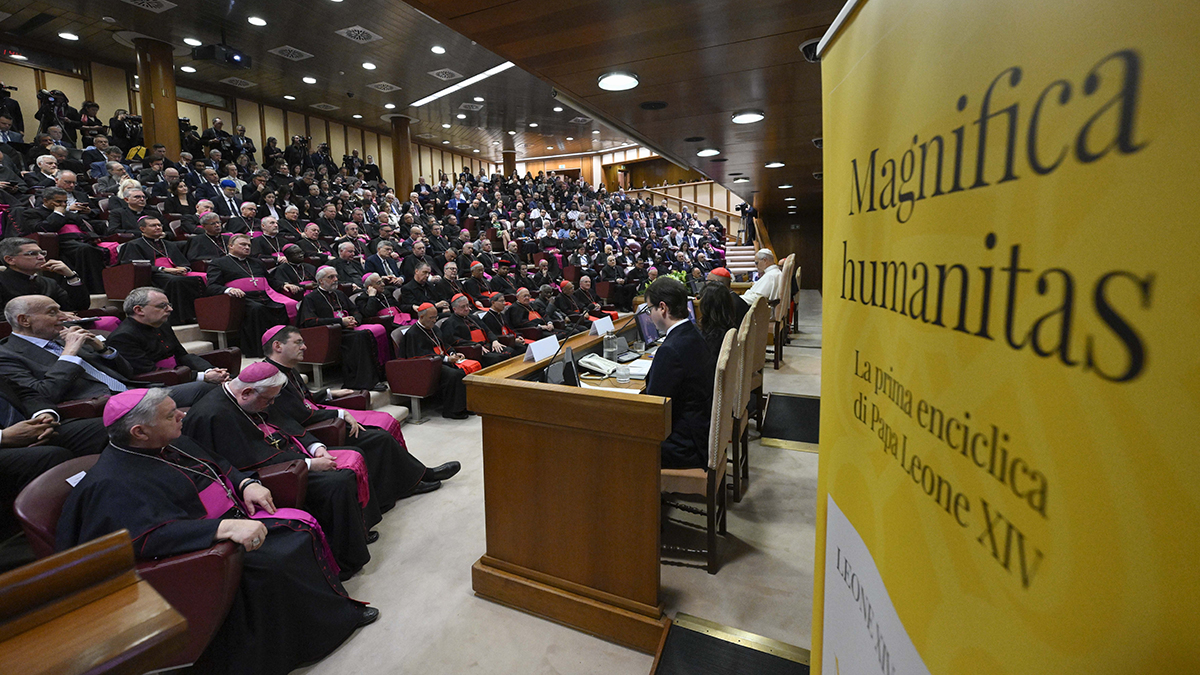
“The pope’s message will be important for helping all people to grapple with this complex and life-changing area,” Archbishop Comensoli said.
“Putting people first ought to be our response to the project of artificial intelligence.
“A good first step in doing this will be to read Magnifica humanitas and consider its practical application across our parishes, schools, hospitals, welfare agencies, workplaces and the general community.”
Developed in consultation with scientists, engineers, policymakers, educators and parents, the encyclical offers insights into the protection of the human person in the age of artificial intelligence, recognising that a change in epoch is unfolding.

It places the dignity of the human person at the centre as the criteria for guiding technical progress.
Magnifica humanitas spells out a “spirituality for our time”, central to which is the affirmation that “the Word became flesh”.
In an age marked by promises of progress capable of overcoming every limit, the fullness of the human condition does not arise from technical power, but from a relationship involving freedom, love, responsibility and grace.
Landmark document – CSSA
Catholic Social Services Australia (CSSA) has welcomed Magnifica humanitas, describing it as a “landmark document (that) offers a profound and timely reflection on the dignity of the human person amid the rapid advances of technology and artificial intelligence.”
CSSA CEO Dr Jerry Nockles said he was overwhelmed to see the focus on Dignity and the Common Good as well as a bias for action – for getting our hands dirty.

“At its heart, Magnifica humanitas reaffirms the infinite dignity of every human being – dignitas infinita – rooted in the profound and eternal truth that each person is lovingly made in the image and likeness of the Triune God,” he said.
“This divine imprint – the divine spark we see in one another – calls us to recognise and respect the sacredness of every life and to uphold that dignity above all else, especially as we face the complex challenges of our modern world.”
“The Holy Father calls us to ‘build society for the common good.’ This is not an abstract ideal but a practical commitment to the wellbeing of all, especially those most vulnerable. These principles have long been the foundation of CSSA’s work supporting families and those facing hardship.
“Importantly, Pope Leo challenges us not to be passive observers but to engage actively – to ‘get our hands dirty on the construction site of our time.’ This is a powerful call to roll up our sleeves and work together with compassion, courage, and hope to shape a more just and humane society.”
Magnifica humanitas comprises an introduction, conclusion and the following five chapters:
- Chapter 1: A dynamic approach faithful to the Gospel
- Chapter 2: Foundations and Principles of the Church’s Social Teaching
- Chapter 3: Technology and Domination. The Dignity of the Human Person in the Face of the Promises of AI
- Chapter 4: Safeguarding the human dimension in the digital transformation: truth, work, freedom
- Chapter 5: The Culture of Power and the Civilisation of Love
The full version of Magnifica humanitas can be viewed here.
The supporting video released by the Vatican can be viewed here.