

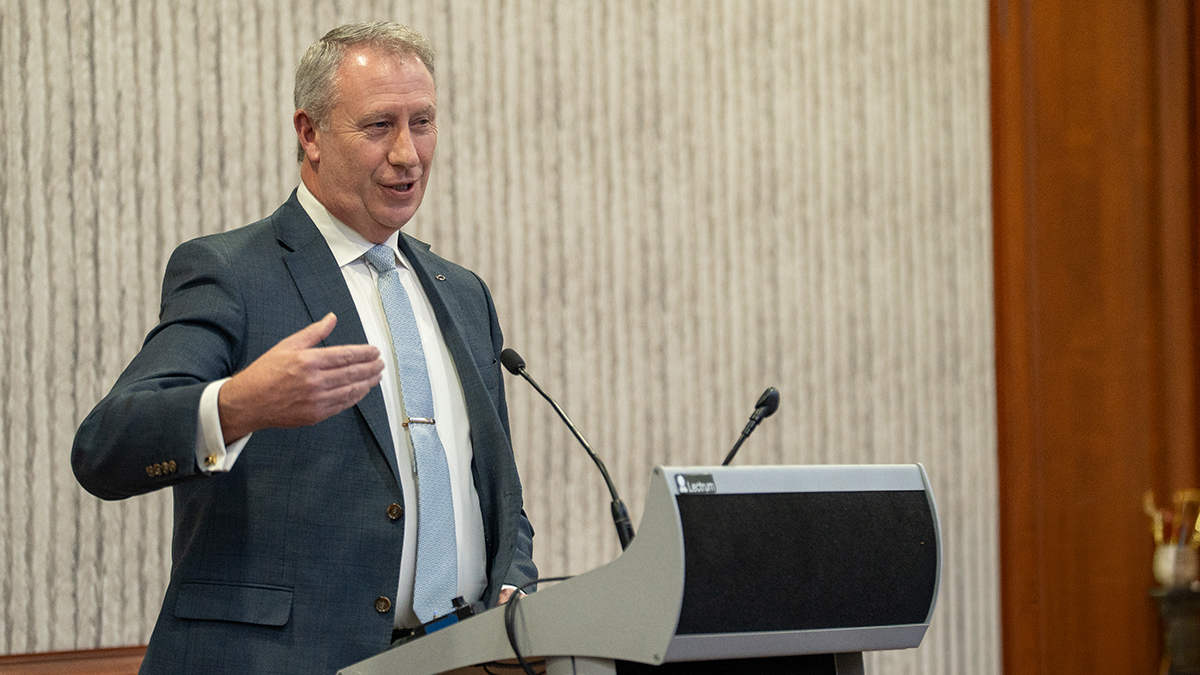
Catholic social service leaders from across Western Australia gathered at the Duxton Hotel on Thursday 11 June for the 2026 St Mary of the Cross MacKillop Oration, where Catholic Social Services Australia CEO Dr Jerry Nockles delivered a stirring oration titled “Looking Through Difference to see Dignity.”

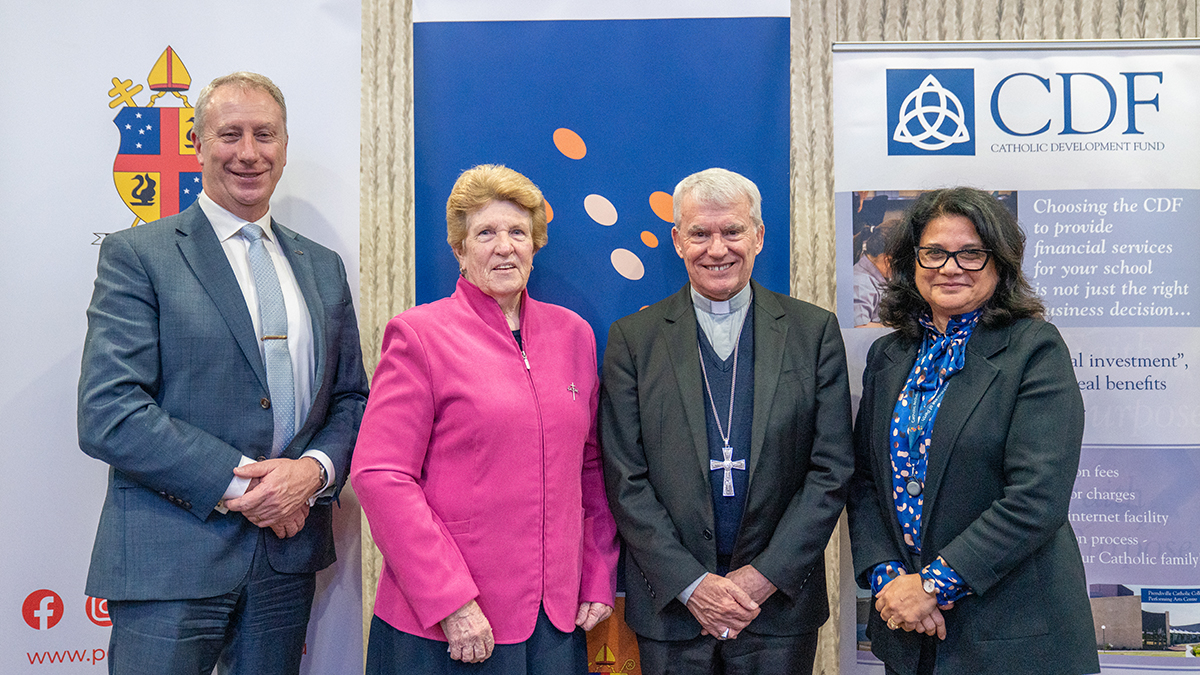
Hosted by Catholic Social Services Western Australia, the evening drew together guests including Perth Archbishop Timothy Costelloe SDB, Auxiliary Bishop Donald Sproxton, Broome Bishop Timothy Norton and leaders of Archdiocesan and external Catholic agencies, among them Identitywa, MercyCare, Catholic Homes, St Pat’s Community Support Services, and Southern Cross Care.
Dr Debra Sayce, Chief Mission Enhancement and Outreach and Chair of the CSSWA Council served as master of ceremonies, and Aboriginal Catholic Ministry Director Donella Brown led the Acknowledgement to Country.

Representing the Sisters of St Joseph was Sr Kathleen Hitchcock RSJ, who said the opening prayer for the occasion.
The oration followed a workshop led by Archbishop Costelloe titled Our Synodal Journey.
Guided by the synodal approach of Conversations in the Spirit, the workshop was facilitated by St John of God Health Care, Chief Mission Integration Officer, Tara Peters.
It provided agency leaders with a space for prayer, reflection, discernment, and dialogue throughout the workshop. The session helped cultivate a shared vision for how the local Church can more fully engage in communion, mission, and shared responsibility.

A former Royal Australian Navy officer who served several postings in Western Australia, Dr Nockles built his oration around the conviction that every person bears the image and likeness of God.
He drew on the American civil rights movement, recalling his presence at the 2011 dedication of the Martin Luther King Jr Memorial in Washington and the witness of the Memphis sanitation workers whose 1968 strike gave the world the placard “I Am A Man.”
“These signs were more than slogans,” Dr Nockles said. “They were a declaration of dignity and humanity.”
He returned to the two counsels St Mary MacKillop left the Church: never see a need without doing something about it and never forget who it is you are following. The first, he said, is the logic of social services.
The second is the heart of Christian discipleship. Without the integration of the two, he warned, the work of Catholic agencies risks becoming no more than that of a well-meaning NGO.
Turning to the fractures in Australian society, Dr Nockles named antisemitism, islamophobia, racism, ageism and xenophobia as symptoms of a single failure to recognise the inherent dignity of every human being.
He welcomed the Bishops’ submission to the Royal Commission into Antisemitism and Social Cohesion and previewed their August Social Justice Statement, Living the Gospel in Times of Social Division.

He marked 135 years since Pope Leo XIII issued Rerum Novarum while insisting that Catholic Social Teaching begins not in 1891 but in Genesis, with the truth that every person is lovingly made in the image and likeness of God.
Dr Nockles cited Pope Leo XIV’s recent address in Madrid, which warned against “sterile simplifications” and called for a “fruitful appreciation of complexity.”
Borrowing the language of economics, Dr Nockles urged his audience to “look through” surface differences to the deeper truth beneath, as the Reserve Bank looks through temporary price movements to discern the true rate of inflation.
“To look through is to see the person behind the prejudice,” he said. “The hope behind the hardship. The dignity behind the difference.”
He closed with Pope Leo XIV’s encyclical Magnifica Humanitas, “Truth is not a territory to be defended, but a good to be shared,” and with the Holy Father’s apostolic exhortation Dilexi Te, which describes a Church that knows no enemies to fight, only men and women to love, as the Church the world needs today.
“When we look through difference, when we look through brokenness, when we look through failure and sin, when we look through fear, what do we see?” Dr Nockles asked.
“We see the divine shadow.” Every person, he reminded the room, carries inestimable worth and is loved, simply by virtue of being a human being. “I am not a stranger. I am not your enemy. I am a human being.”
