


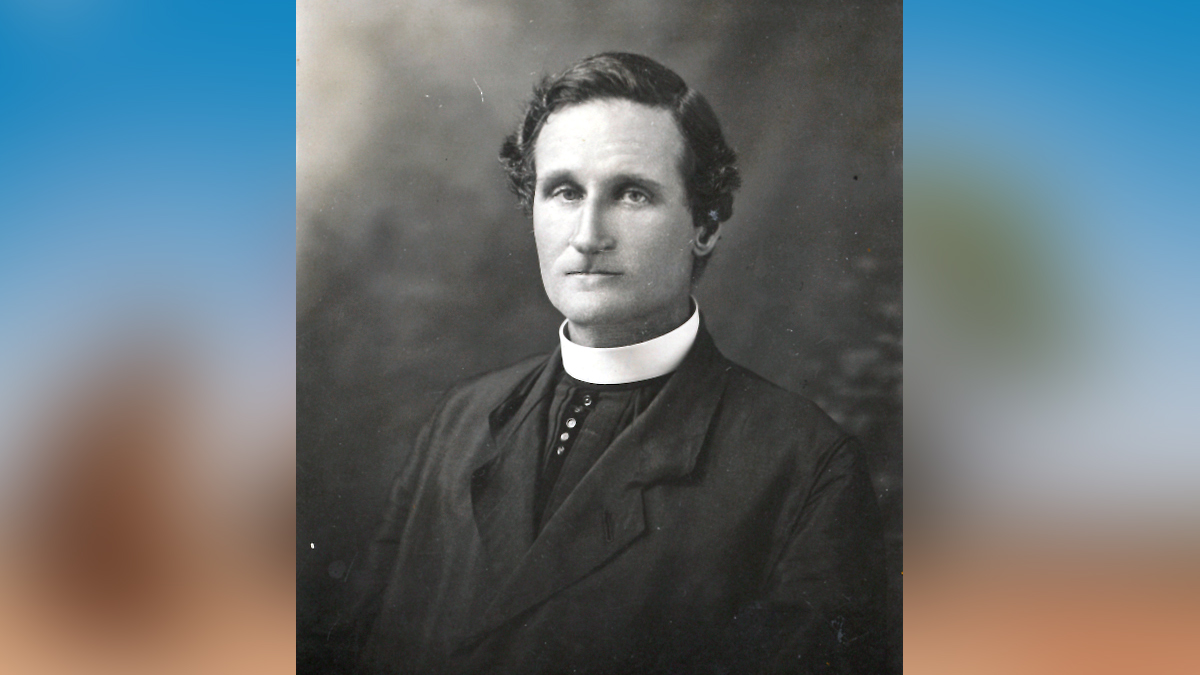
On a hill in the Bahamas, in a cave he fashioned into a burial place with his own hands, lies Monsignor John Cyril Hawes, dressed in a Franciscan habit, arms outstretched in the form of a cross.
It is exactly how he arranged it before he died.
Now, nearly 70 years later, the Catholic Church has taken its first formal step toward declaring him a saint.
Hawes has been granted the official title Servant of God, following approval by the Dicastery for the Causes of Saints in Rome for the Diocesan Stage of his canonisation cause to proceed.
The approval was granted on 15 May 2023, confirming him formally as Servi Dei Joannis Cyrilli Hawes – the Servant of God John Cyril Hawes – and opening the next chapter in a cause that could one day make him the first saint from Western Australia.
“I think it would be a great privilege for the community and for Western Australia to have him declared a saint,” said Fr Robert Cross, Chancellor of the Diocese of Geraldton and proposed postulator for the cause during its Diocesan phase.
He added, with characteristic candour, that patience would be required. “These things take a long time, sometimes up to 100 years or more.”
The cause has been building quietly for nearly a decade.
In 2017, Bahamas Archbishop Patrick Pinder raised the idea with Fr Cross and what began as a conversation between two dioceses separated by oceans has grown into a formal international process.
The Diocese of Geraldton, vast in geography but limited in resources, has leaned on the generosity of supporters to fund the work.
The Knights of the Southern Cross provided a significant grant that made possible a research expedition undertaken earlier this year by Archdiocese of Perth Archivist Odhran O’Brien, who travelled to the United States, the Bahamas and England to gather historical records associated with Hawes’s life.
Mr O’Brien, who is a doctoral candidate at the University of Western Australia and has previously traced the stories of Perth’s early bishops through archives around the world, accessed hundreds of documents in monasteries and diocesan archives that have never been indexed or digitised.
Under an oath of confidentiality required by Rome, he cannot discuss the specifics of what he found, but he confirmed the research uncovered previously unknown details about Hawes’ spiritual life.
Two people in the Bahamas who remember Hawes have also been located, and the Diocese is working toward formally interviewing them. Their testimony, Mr O’Brien said, will be important to the cause.
It is the kind of evidence that a canonisation cause depends on – intimate, lived accounts of a man whose public legacy is already written in stone across the WA Mid-West.
Born in Richmond, Surrey, on 7 September 1876 into a middle-class Anglican family, Hawes trained as an architect before his ordination as an Anglican priest.
His conversion to Catholicism was neither simple nor sudden.
He spent nearly a decade wrestling internally with his faith before converting in New York State in 1911 and being ordained as a Catholic priest in Rome in 1915.
He was apprehensive, Mr O’Brien has noted, about the reaction such a change would bring.
An Anglican priest converting to Catholicism was no small thing.
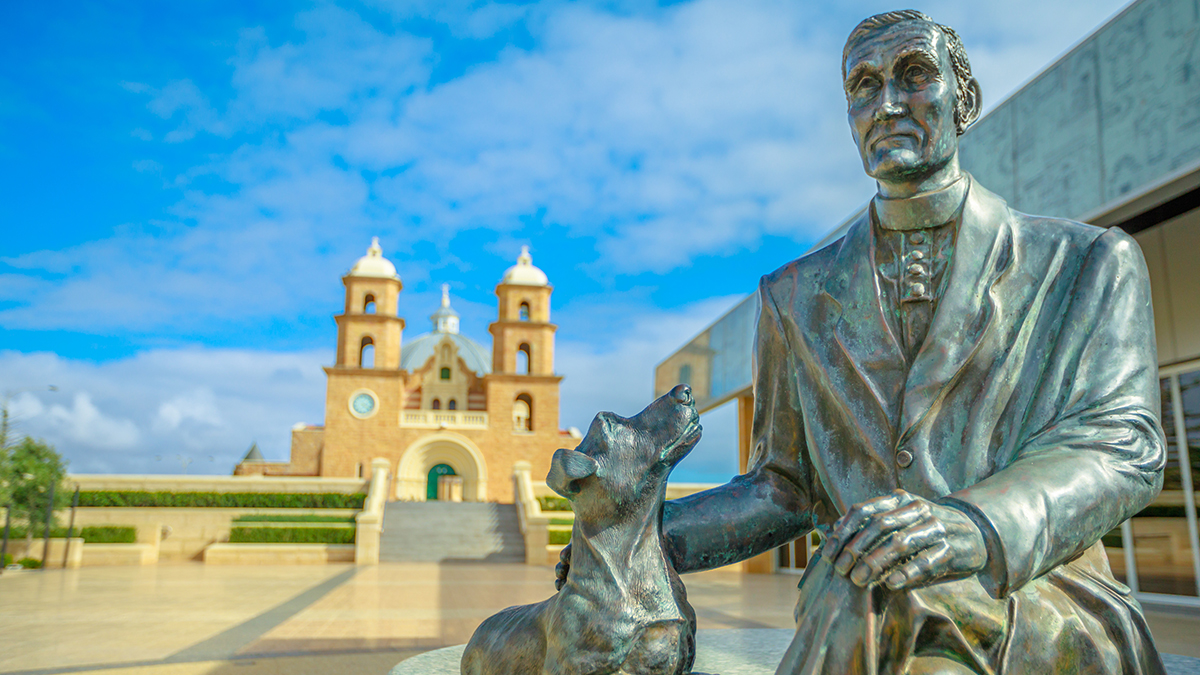
He arrived in Geraldton that November and stayed for 24 years, leaving behind 27 churches and buildings that are moulded into the landscape of the Mid-West, Gascoyne and Wheatbelt.

From the corrugated iron of St Patrick’s Church in Wonthella to the soaring dome of St Francis Xavier Cathedral, Our Lady of Mt Carmel Church in Mullewa, and Nazareth House on the edge of Champion Bay, Hawes built in the Arts and Crafts Movement philosophy using local materials, responding always to what the community needed and what the country could provide.
He also designed his own hermitage in Geraldton and a chapel in the town cemetery, with a spot reserved for his own grave. He did not use it.
In 1939 he left for the Bahamas, where he would spend his final years designing and building more than 20 structures and ministering to island communities, living eventually as a hermit under the name Fra Jerome.
He died in Miami on 26 June 1956 at 79 and was returned to his beloved Hermitage on the highest Bahamian hillside, Mt Alvernia, where he rests today.
The process ahead remains long and rigorous. Fr Cross explained that once the Diocesan stage is complete, all documentary evidence is presented to the Congregation of Saints in Rome, which determines whether Hawes lived a life of extraordinary virtue.
Fr Cross intends to complete the required Vatican formation course to take on the role of postulator for the Diocesan Phase in 2027 and possibly the Roman phase into the future.
In the meantime, the cause needs two things the Diocese cannot produce alone: accounts of intercession, and the stories of ordinary people who encountered Hawes or whose family members did.
Fr Cross confirmed that people are and have been already seeking Hawes’s intercession.
There is also historical evidence of intercession reaching back further, though it requires more thorough investigation.
If this article reaches anyone who has sought John Hawes’ intercession in prayer, or who carries a family story connected to his life, Fr Cross wants to hear from them. Formal interviews may follow.
“If they have any stories from their family histories that relate to Hawes, we would love to be notified about this,” Fr Cross said.
A further research trip to Rome and New York remains on the agenda to continue filling the gaps in the historical record.
For now, in churches from Geraldton to Mullewa and across a Bahamian archipelago, to England and Wales, the work continues.
The man who built his own tomb is being examined, one document at a time, for signs of something that no architect can create.
Anyone who has sought the intercessory prayers of Monsignor John Hawes, or who has family stories or objects connected to his life, is asked to contact Fr Robert Cross on 0400 216 088 or at chancery@geraldtoncatholic.org.au