


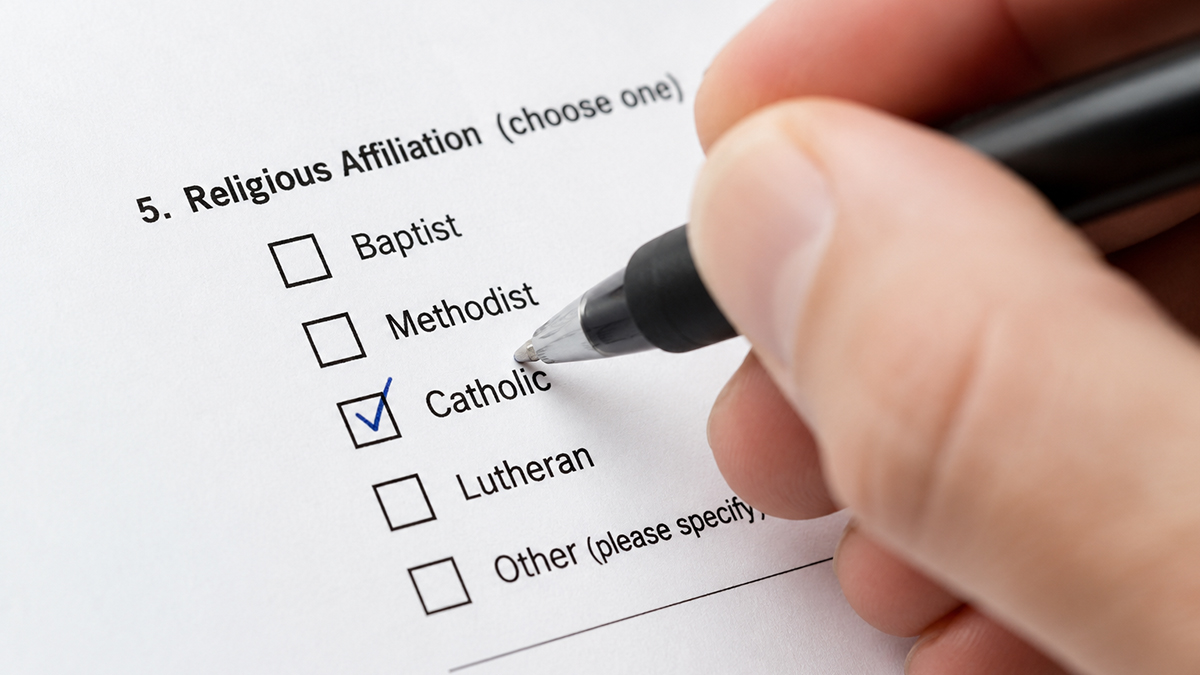
Catholics are being encouraged to identify themselves in the five‐yearly national Census that will take part on Tuesday 11 August.
The Census of Population and Housing, conducted by the Australian Bureau of Statistics (ABS), is a “comprehensive snapshot” that reveals the changing economic, social and cultural demographics of the nation.
Religious identification is a basic variable used in socio-demographic research and a question regarding a person’s religion has been included in all Australian Censuses.
Answering the question has always been optional. Despite this, it has had a high response rate. In 2021, it recorded a 93 per cent response rate with 5,075,910 people – or 20 per cent of the Australian population – describing themselves as Catholic.
Together with country of birth and language spoken at home, religion is an important part of a person’s identity and an indicator of Australia’s cultural diversity.
National Centre for Pastoral Research (NCPR) director Trudy Dantis said data from the religion question was crucial to helping Catholic parishes, schools, dioceses and organisations understand their communities and plan for ministry and mission.
“Census data tells us a great deal about the demographics of self-identifying Catholics in particular regions, and for this reason, it is invaluable to pastoral planning,” Dr Dantis said.
“It is also an important aspect of planning for our Catholic organisations, since many Australians seek assistance from these institutions in times of personal crisis, and for services such as schools, health care facilities and welfare.”
The NCPR and its forerunners have been acquiring and analysing Census data from the ABS since the 1991 Census, making reports available to the Catholic community at national, diocesan and parish level (https://ncpr.catholic.org.au/national-catholic-census-project/)
Census data on religion does not reveal whether a person believes in God, goes to church, or even whether they are a member of a religious organisation, because it is not designed for that purpose.
In recent times, some groups in Australia have tried to encourage people not to identify with a religion unless they are actively practising, inviting them to tick the “No Religion” box instead.
However, research shows that many non-practising Catholics continue to identify as Catholic because it remains an important part of who they are.
Dr Dantis encouraged all Catholics to tick the “Catholic” box this year, while noting that some may need to identify in a slightly different manner.
“While the religion question provides tick‐box response categories for the major religious groups, the ABS also makes provision for counting members of religious groups with small populations. This option is extremely important for our Eastern Rite dioceses so they can obtain more accurate demographic statistics about their own individual communities,” she said.
“Catholics from the Syro-Malabar, Chaldean, Ukrainian, Melkite and Maronite communities are therefore encouraged to choose the ‘Other’ option and write in the name of their religious groupinstead, for example, ‘Ukrainian Catholic’.
“This will ensure they are counted correctly within their own community, rather than assuming them to be Latin Rite Catholics.”
Questions about Catholics in the Census can be directed to the National Centre for Pastoral Research by emailing ncpr@catholic.org.au.
