

“We have gathered around this Migrant Cross, a sacred sign inviting us to recognise the dignity of every person, and to welcome the stranger as Christ among us,” Archbishop Timothy Costelloe SDB said recently.
Celebrating the Welcome Mass for the Migrant Jubilee Cross, Archbishop Costelloe was joined by concelebrants Fr Paul Hyunh, Fr Thomas Zureich, Fr Yosep Remegius Asnabun, Fr Chrispine Witika and Fr Ihor Holovko, assisted by Deacon Jhee Baguinat.

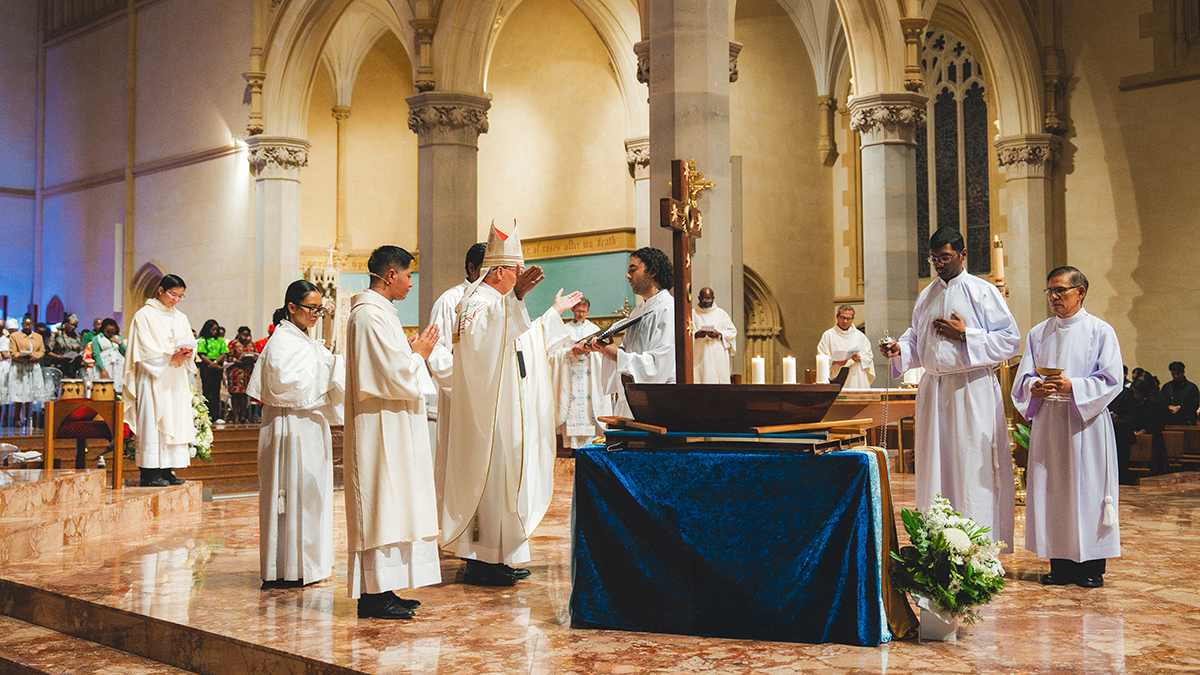
A symbolic smoking ceremony preceded the procession of the Migrant Jubilee Cross into St Mary’s Cathedral where the regular congregation was joined by invited guests representing numerous Catholic cultural communities including Burma, East Africa, Indonesia, China, Congo, Uganda, Zimbabwe, Ukraine, Vietnam, Philippines and Ghana.
In his homily, Archbishop Costelloe explained the Migrant Jubilee Cross was born out of the 2025 Jubilee Year, the global Church’s focus on migration and the gifts migration brings with it.
Referring to the Gospel (Luke 24:13-35), he said the plight of migrants drew a parallel to the story of the disciples on the road to Emmaus.
“For so many of us here tonight, either we or our immediate forebears arrived in this country after a sometimes long, often difficult and certainly challenging journey,” he said.
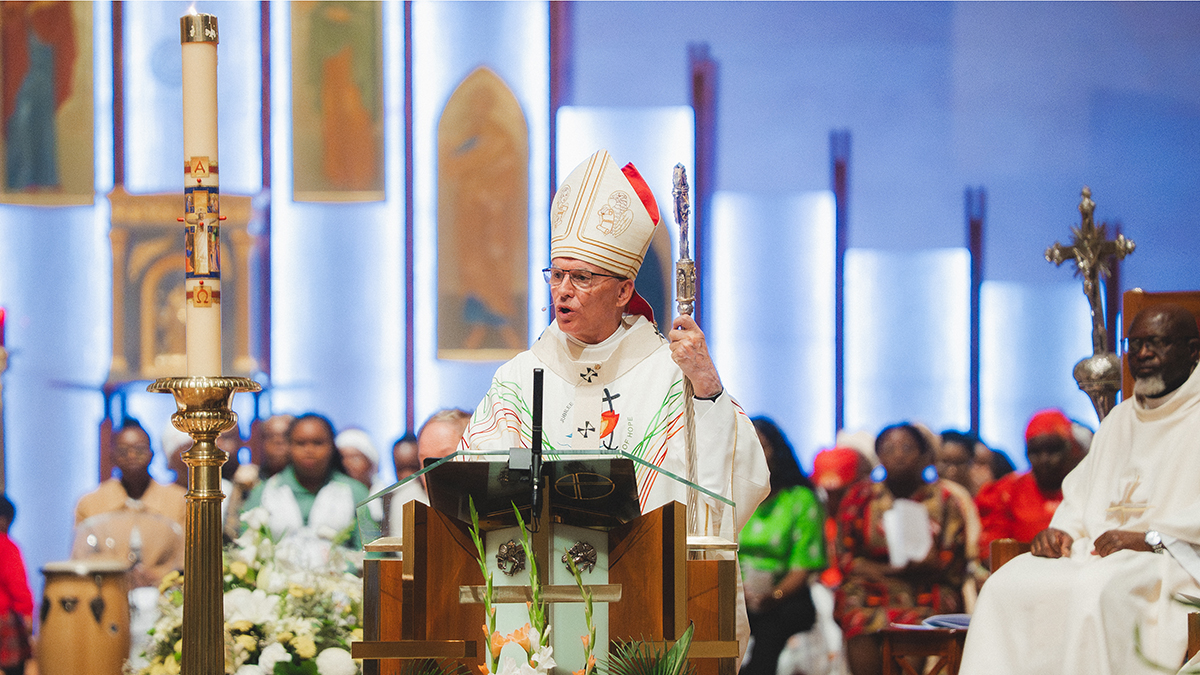
Like the disciples, our journey through life, he suggested, often has moments of great hope but also moments of despair.
“This is certainly the experience of many migrants and refugees who have come to this country full of hope, but who, at least for a time, and sometimes sadly for a very long time, have encountered difficulties, misunderstanding and rejection,” he said.
To help migrants and refugees settle and assimilate into society, Archbishop Costello said we needed to be a welcoming and tolerant country.
“As my friend, the retired Chief Rabbi of the Jewish congregation here in Perth often reminds me, we don’t just want to be a country that tolerates people from other places; we want to be a country that strives to respect and value everybody who comes to this country,” he said.

Similarly, recognising and respecting our past, he said, was an essential part of our Australian story.
“In speaking as we do and as we must of the multicultural nature of modern-day Australia, we must never forget and always honour the original inhabitants of this great land of the Holy Spirit,” he said.
The gifts that migrants and refugees bring to the Church were further celebrated during the Mass with the Universal Prayer/Prayers of Intercession read in Burmese, Kokani, Mandarin, Cantonese, Tagalog and English and the Our Father sung in Aramaic and English. The post communion hymn, Mwambe Yesu (Jesus Reigns) was performed in Shona by the Zimbabwean Catholic Choir.

Pilgrimage invited
Catholic parishes, parishioners and communities across Western Australia are invited to participate in The Pilgrimage of the Migrant Jubilee Cross.
Deeply symbolic and sacred, the Migrant Jubilee Cross is a gift from migrant communities to the Church – a place that symbolises welcome and belonging, integration and solidarity.
Set on a boat-shaped base, the 1.5 metre-wooden cross is made from Australian recycled timber and incorporates the Southern Cross constellation.
It also contains sacred relics of the Holy Family – fragments from the Holy Crib of Our Lord, the veil of the Blessed Virgin Mary and the cloak of St Joseph – as well as a relic from the 1914 cedar coffin of St Mary of the Cross MacKillop.

The Migrant Jubilee Cross is symbolic of the faith, gifts, contributions and resilience that migrant communities bring to the church and the wider community.
Until Sunday 3 May it will be hosted by various parishes, schools and groups, providing the faithful with a unique opportunity for spontaneous pilgrimage.
Deacon Greg Lowe, Director of the West Australian Catholic Migrant and Refugee Office for the Archdiocese of Perth, said a pilgrimage to experience the Migrant Jubilee Cross provided a rare opportunity for parishes, schools and communities to come together in communal prayer and celebration.

“For Australians, migration is part of our history and story, so everyone can feel a connection to, and engage with it and its symbolism,” he suggested.
At the conclusion of its time in the Perth Archdiocese, the Cross will travel to the Bunbury (Monday 4 May – Sunday 17 May), Geraldton (Monday 18 May – Sunday 31 May) and Broome Dioceses (Monday 20 July – Sunday 2 August).