

The symbolism and tradition of the Last Supper, the sharing of the Eucharist, the washing of feet and the Passion of Our Lord was once again honoured at Holy Thursday and Good Friday services across the Archdiocese.
At St Mary’s Cathedral, Archbishop Timothy Costelloe SDB said the Holy Thursday gospel tradition of linking Jesus’s last supper with a Passover meal draws us into a new and deeper appreciation of God’s saving mystery.

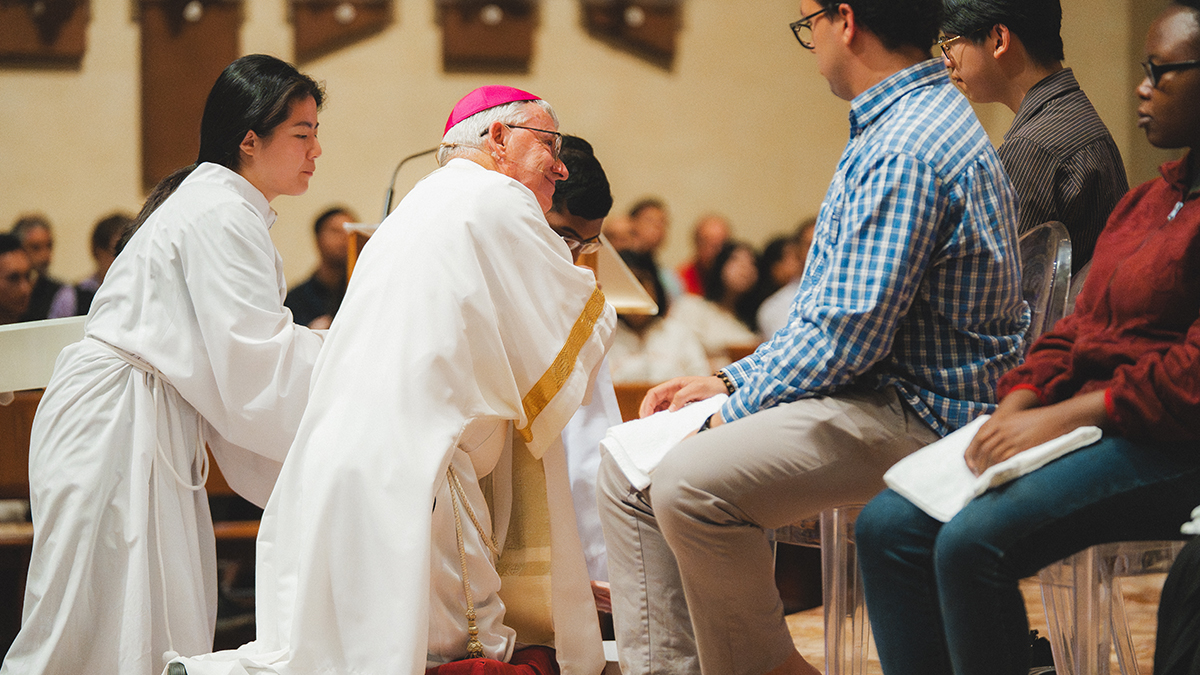
“We encounter God through Jesus – through the Gospels, through our fellow Christians and most of all through the Eucharist when we gather to do what Jesus did on the night before He was betrayed. Each time we celebrate the Eucharist, the Lord draws us to Himself so we can do what He invites us to do,” he said.
“Because of the Eucharist, we need never be without Him. He gives Himself to us as food and drink and through the Eucharist and unites Himself with us in such an intimate way that He begins to live within us.”
In today’s society, Archbishop Costelloe said it was easy to fall into the trap of thinking that our happiness and fulfilment depend on what we have.

“But really our ultimate happiness depends on who and what we are: on the extent to which we are living lives of integrity, generosity, compassion and openness to God.
“It is Jesus’s gift of Himself in the Eucharist which can gradually transform us and enable us to become all that God has created us to be,” he added.
Passion of the Lord – Good Friday
Tradition that goes back to the beginning of Christianity – when Christians annually celebrated the passion, death, resurrection and ascension on the night of the resurrection of Jesus – was at the heart of Good Friday services.
“The prayers we about to use are practically the same as those first used by the bishop in Rome in those days. We are using them again in the same faith – that we believe in the loving mercy and care of God for each of us and all the people on the earth,” Auxiliary Bishop Don Sproxton said in his homily at St Mary’s Cathedral.
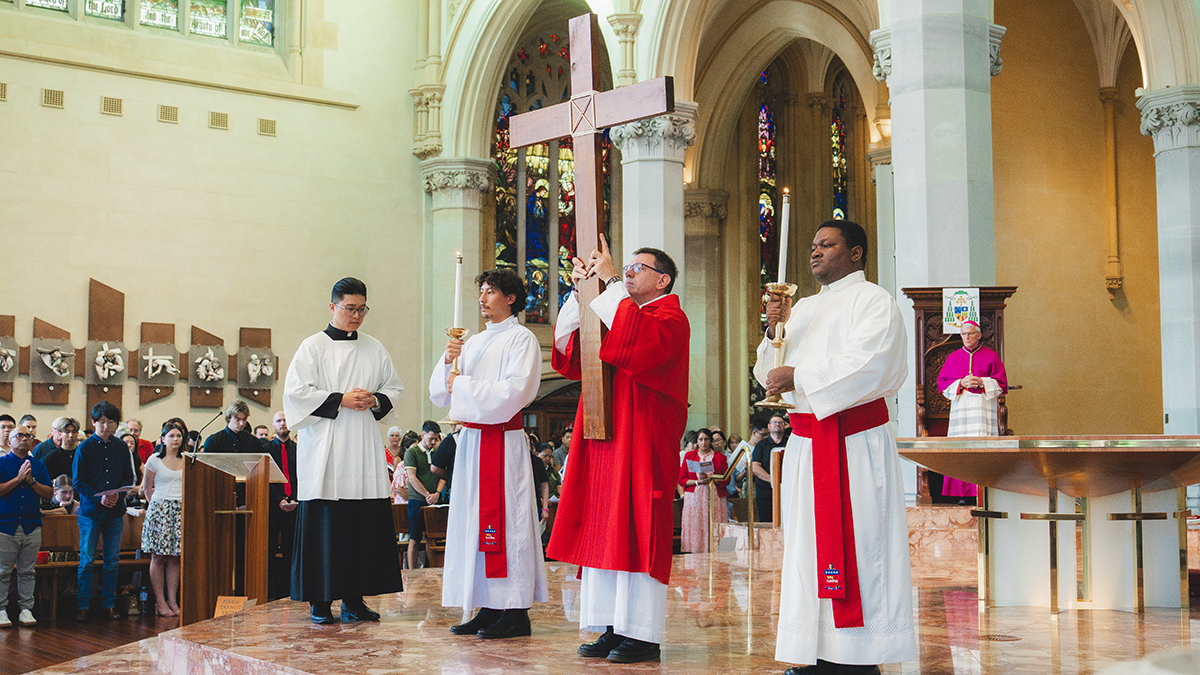
While acknowledging the solemnity of the day, Bishop Sproxton said the liturgy was hope-filled rather than doom-laden.
“It stirs up a joy and a desire to rejoice at the great thing our Father has done for us,” he suggested.
“The cross is the focal point – but not as an instrument of torture and death – it is placed before us for veneration because it is the means of our redemption.
“It is the great sign of victory: the victory of Christ over death and the powers over the world that seek our eternal destruction. It is the sign of the love of the Father, perpetually on display.”

Drawing a parallel with the life and works of Sr Irene McCormack who was killed because of her service for others, Bishop Sproxton said her faith was at the core of her ministry.
“She believed that the spirit of Jesus had been working within her each day giving her strength to change her heart, to learn how to be a humble servant for others and to trust that whatever she would suffer, the Father would use her for those people,” he said.
“Jesus too paid the price for proposing the way of love, integrity, reconciliation, peacemaking and unity, but he has bequeathed to us something most powerful.
“From the cross he breathed his spirit on us. His spirit is the spirit of strength, truth and love. Then, after his death, the water and blood flowed from his side, which we recognise as the gifts of Baptism and the Eucharist, signs that he remains very close, is present to us, empowering us to grow in faith and love, to have the courage to work on a change of heart and be humble servants for his sake.”
In this way, Bishop Sproxton said the cross is “the sign of our redemption and the power of Christ at work in our lives each day to save us, so that we can really follow him out of the tomb to new life.”
