

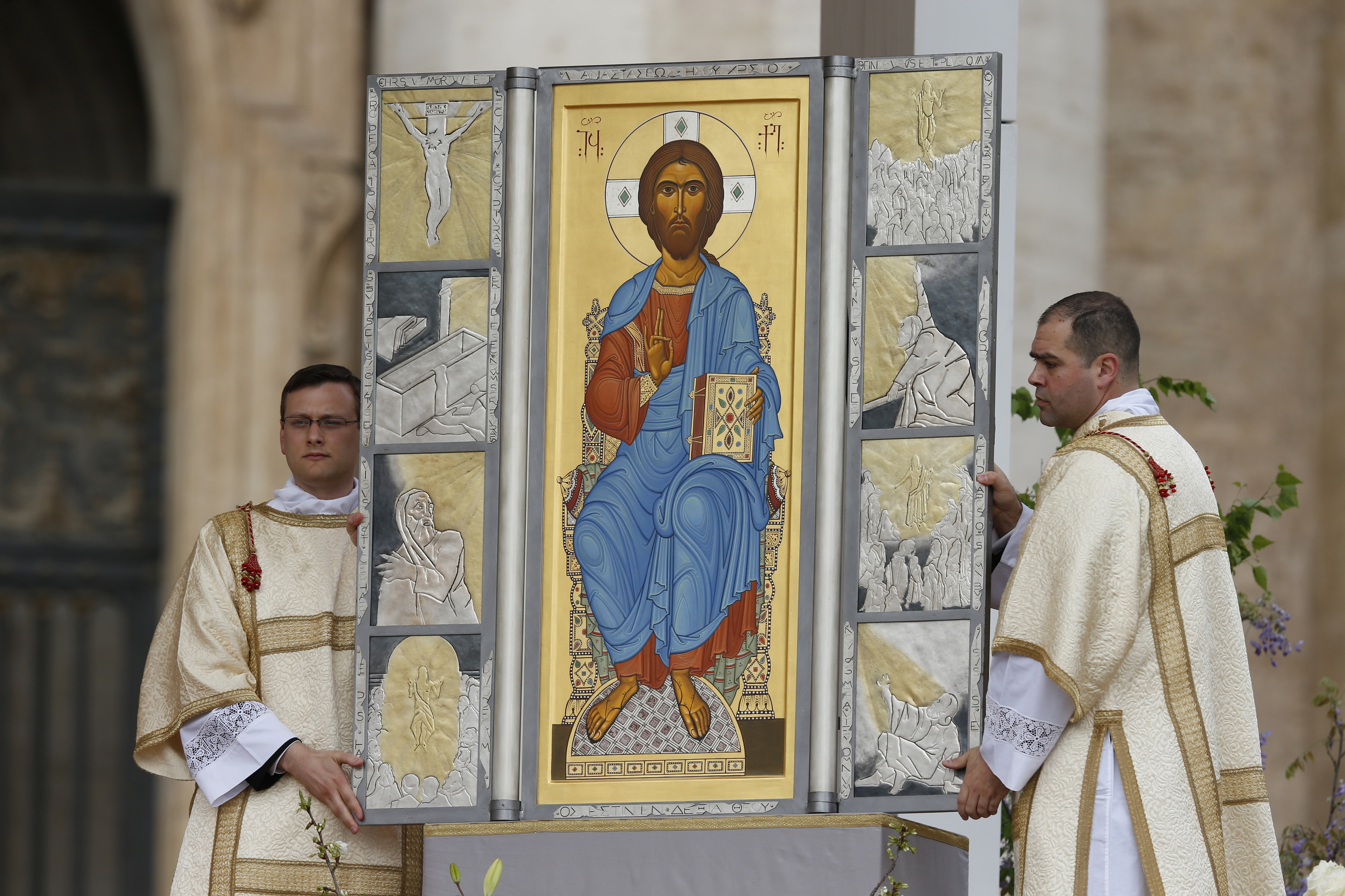
The News of every Easter is that ‘Jesus Christ is Risen’. He is alive. It is news we need to share.
This makes our faith different
Some today, who know little about world religions, argue that one religion is much the same as another. These people need to hear the news that Jesus is alive for it is this news that makes our religion different. Our Founder is not dead but alive. He calls each of us to relate with him personally. If we do, in the ways he taught, we can draw on his power for our daily lives. We can ‘know’, not just ‘know about’ our Founder. We can have personal experiences of him and his power. With St Paul, we can say we ‘know Christ and the power of his resurrection’ [Philippians 3:10]: The more we seek his guidance and strengthening; his love and healing in our daily lives; the better we will come to know him. Jesus frees us from temptations and personally crippling attitudes and habits. He forgives and renews us after sin.
How does Jesus share his resurrection power today?
The most important ways Jesus shares the power of his resurrection today are through
• daily prayer
• reflection on the scriptures and what they mean for our lives, and
• the seven sacraments, sources of the power of Jesus’ resurrection for human life needs.
Of these ways, we focus most upon his sacraments during Easter.These are the focus of this reflection.
The human need for sacraments
God originally created our first parents in harmony with their Creator. Because of God’s power, they knew only inner harmony and harmony with each other in their daily lives.
However, when they sinned, our first parents lost their personal relationships with God. As a result, now they experienced inner division instead of harmony. They experienced conflict instead of harmony in their relationship.
Human nature was now flawed. It was this flawed nature that we have inherited as their descendants.
Every parent today knows, for example, that their beautiful baby will know inner division. Love will be weakened by selfishness; compassion, by judgementalness; generosity, by greed. Dominating emotions will emerge, along with attitudes and habits that will undermine their child’s future efforts to love and do good.
Every parent knows too that this division will lead their child to sin. Like our first parents, they will prefer at times their own way rather than God’s way. They know that their child will experience conflict with others.
The root of the inevitable division within and conflict with others that their child will experience, the source of the flaw in human nature, is ‘original sin’. This is the traditional term for the inherited human tendency to try to live independently of God.
Human beings cannot relate with God as God wishes while original sin remains. To relate with God, therefore, parents realise that their child will need to become a ‘new creation’, a new creation with their nature renewed. Their child will need Jesus as Saviour.
It is through the sacraments that Jesus frees people from original sin. Sacraments empower believers to rise above errant human feelings and weaknesses; and forgive and heal.
BAPTISM: becoming ‘new creations’
Jesus frees us of original sin through Baptism. However, as patients need to be strengthened after serious surgery, we need to be strengthened against the human weaknesses that are the result of original sin. Through Baptism, Jesus shares with us the Holy Spirit who led and strengthened him in his own temptations to lead and to strengthen us in our lives and struggles. As St Paul put it, we become ‘temples of the Holy Spirit’ [1 Corinthians 6:19].
Because God is a Trinity, where the Spirit is present, there too Jesus and God the Father are present. Through the Spirit, therefore, God is present within us, as Jesus promised at the Last Supper [John 14:16-17, 23].
A new relationship with God
Through Baptism, Jesus shares with us God’s own nature, which he called ‘eternal life’ or ‘life’ [2 Peter 1:4; John 4:14; 6:53-54]. Because we share in God’s nature, we become children of God the Father, as Jesus is the Son. However, unlike Jesus, we become children of God by adoption.
As a result of this new relationship, we have immediate access to the Father and the Spirit – like Jesus. We can participate in Jesus’ prayer to the Father, especially in the Eucharist and the sacraments. With Jesus, we can pray ‘Our Father’.
Docility instead of resistance to God
The effect of original sin is the tendency to behave independently of God’s wishes for us. To help us overcome this weakness, Jesus shares with us the Gifts of the Holy Spirit through Baptism. These are the gifts he himself possessed and drew on in his own human life and journey. These gifts help us to be docile with God, instead of resistant. They help us to become committed to living as God wills, especially by keeping the Commandments. As we obey God in our daily lives, we draw closer personally to God.
Drawn into Christian community
From the very start, the Apostles learned that, to draw closer to Jesus – and through him, to God – they needed to belong to the community of disciples, which Jesus called his ‘Church’ [Matthew 16:18]. No one can deepen in relationship with Jesus on their own.
Through Baptism, Jesus establishes us in a spiritual relationship with every other baptised person. Being present within each individual, through the Spirit, Jesus seeks to draw all people together. Christian community grows to the extent each baptised person responds to the impulses of the Spirit.
Also, it is through the worship and life of this community that believers can draw fully on all the means Jesus gave to experience his power in their lives. This is why Baptism is called the ‘first Sacrament of Initiation’.
Gifts to protect the relationship
A danger in any relationship is weakened trust. To protect us against this, Jesus shares the gift of faith so we will always believe in God and all God teaches. This gift is needed in life situations where our faith in God may be challenged.
A second danger is a declining sense of trust that the other person’s promises will be kept. To protect us against this, Jesus shares the gift of hope.
A final danger in any relationship is weak love. To protect us against this danger, Jesus shares with us the gift of charity. This is ‘the love of God poured into our hearts by the Holy Spirit’ [Romans 5:5]:
CONFIRMATION: Strengthened for mission
As people grow closer, they share common interests. And for Christians, to grow closer to Jesus they need to share his love for people. This is the love that motivated him to command his followers to continue his mission by proclaiming his gospel to all [Mark 16:12].
Knowing that his followers could face rejection, even persecution and death, Jesus promised them the ‘power from on high’ [Luke 24:49] He fulfilled this promise at Pentecost when his followers were filled with the Holy Spirit [Acts 2:1-6].
Christians today know rejection and persecution – even ridicule. So that future generations could also be filled with the Spirit, as were the Apostles at Pentecost, Jesus gave his Church the Sacrament of Confirmation. Though a separate sacrament, Confirmation was celebrated initially with Baptism, for the early Christians were primarily adults.
Confirmation ‘confirms’ or strengthens what has been received through Baptism. The Gifts of the Spirit are strengthened so that, as well as being docile to God, the confirmed person can face rather than fear a hostile and rejecting society.
The Gifts of the Holy Spirit
Through the Spirit of Wisdom, the Holy Spirit helps us to see the world, ourselves and life’s problems as God sees them. The Spirit helps us to see God’s actions in the world around us.
Through the Spirit of Understanding, the Holy Spirit helps us to see how Jesus’ teachings relate to our life situations.
Through the Spirit of Right Judgement, the Holy Spirit guides our decisions – moral, personal and vocational.
Through the Spirit of Knowledge, the Holy Spirit helps us to know (not just ‘know about’) God in an increasingly personal and deep way.
Through the Spirit of Courage, the Holy Spirit strengthens us against challenges and gives endurance in the face of pressures to stop living as Jesus taught. This includes overcoming the challenges of peer and social pressures.
Through the Spirit of Reverence, the Holy Spirit moves us to respect God and the things of God.
Through the Spirit of Wonder and Awe in God’s Presence, the Holy Spirit deepens our sense of God’s presence with and within us, and our fear of losing our personal relationship with God through sin.
Strengthened by these gifts, Christians are empowered to grow closer to Jesus as they become increasingly committed to his mission in their world.
THE EUCHARIST: deepening intimacy with Jesus
The deepest of all human relationships is ‘communion’. People who are in communion are so united in their spiritual depths that this oneness percolates through their hearts, thoughts, emotions and behaviour.
Jesus wants ‘communion’ with us – but at a level far beyond what is possible in human relationships. To make this possible, he gives us the Eucharist. Different parts of this thanksgiving sacrifice ritual help us to focus on the different ways Jesus draws us into communion.
Prayers for needs answered
Jesus draws us into communion by making the prayers we bring to the Eucharist his own. United with the prayer of the Son of God, the needs we pray for are always granted in ways God knows to be good [John 16:23; Matthew 7:11]. We grow in communion with Jesus as we place before him our own prayers for the good of others and ourselves.
Jesus enlightens
Jesus draws us into communion by guiding us in our lives; by helping us to grow in his understanding of God, ourselves and others; and by answering our life questions. He does this through the Holy Spirit who stirs our thoughts and gives us insights.
We grow in communion with Jesus as we place before him where we need his guidance and answers.
Redemption: Jesus frees us from ‘sin’
‘Sin’ here refers to anything in our lives that is contrary to God’s will. This includes actions that would undermine love, goodness, justice and compassion; being dominated by emotions that would lead us to make sinful choices; and giving in to crippling attitudes such as racism that lead us to despise and to denigrate others.
By the power of his death on the cross, Jesus ‘redeems’ or frees us from sin to the extent we are converted to him. We deepen in communion with him as we offer our life struggles and failings in the Eucharist, sharing our lives with him.
Salvation: Deepens the influence of the divine
Jesus shares with us the power of his resurrection through the Eucharist. As we cooperate with this power, the influence of the divine grows within us. He ‘saves’ us.
We grow in communion with Jesus as we place before him where in our lives we need his power to live in our families and marriages; our friends, places of work and recreation; our Church and community lives as he taught.
Holy Communion
Jesus draws us into communion as we receive him in Holy Communion. He nourishes all the gifts of Baptism, Confirmation, Holy Orders and Matrimony – and all that is spiritual in our lives.
We deepen our communion with Jesus as we share with him in silent prayer every aspect of our lives.
PENANCE: renewed baptismal relationship
There is a world of difference between forgiveness and reconciliation. People can forgive each other, but this does not mean that their relationships are fully restored as though there had been no offence given.
Through Penance, Jesus restores our baptismal relationship with himself and through him, with God. He restores our spiritual relationship with the rest of his Church community. These reconciliations leave in us a new sense of peace.
Jesus forgives our sins. Through the Spirit, he strengthens where we gave into temptations to help us avoid doing so again. The more frequently we celebrate the Sacrament of Penance, the stronger spiritually we become.
ANOINTING OF THE SICK: strengthened in sufferings
Serious illness and frailty can give rise to psychological sufferings, fears, discouragement and even despair. Facing death too can give rise to temptations against God.
Jesus knew physical and psychological sufferings. Yet he also knew that these would lead to his resurrection and the salvation of people.
Through Anointing, Jesus moves his followers to unite themselves and their sufferings with him more fully. They then grow in hope and see purpose in what they have to endure. They can offer their sufferings for loved ones and for the needs in the world.
They also come to experience peace and joy. They are strengthened in the face of all they have to endure, even death.
HOLY ORDERS: Jesus supports his People
Jesus knew that his followers would need his ongoing support to continue faithfully his mission in people’s lives.
To give witness to their personal relationships with Jesus, their relationships would need nurturing. To teach his message, they would need deepening understanding. To live as he taught, they would need empowerment. To challenge social structures and trends that violated human dignity, they would need strengthening.
These are some examples of believers’ needs. Only Jesus himself can fulfill them.
For this purpose, Jesus called some to become Apostles [Mark 3:13-19]. He would serve his people through them. He taught that ‘Whoever welcomes the one I send, welcomes me’, and whoever welcomes me welcomes the one who sent me [John 13:20]. ‘Anyone who listens to you listens to me’ [Luke 10:16].
Jesus gave the Sacrament of Holy Orders for the Apostles to hand on to others the spiritual responsibilities and power Jesus gave them. Bishops, priests and deacons receive these spiritual gifts in varying degrees through this sacrament.
Through the ordained, Jesus continues to teach, lead and sanctify his baptised followers.
MATRIMONY: Jesus dwells with married couples
Marriage brings challenges, no matter how much a couple love each other. Jesus creates a special spiritual relationship between himself and a couple in the Sacrament of Matrimony.
Couples who relate with Jesus, especially by sharing their lives and challenges with him through the Eucharist and daily prayer, find Jesus purifying their love of selfishness and other weaknesses. They find him strengthening them in times of trial, and when they need to help each other with their burdens.
Jesus empowers them to forgive; to rise again after failing; to love and live as he calls; and to reverence each other. Couples who relate with Jesus as he taught find their communion with him and with each other deepening.
Let us spread the news
To know Jesus and the power of his resurrection is a life-changing experience. Yet so many people today have not yet heard this message.
Let us reflect upon how we can draw on the power of the Risen Jesus for our daily lives this Easter. Let us recognise where in our lives we need him.
Then, as we continue to experience his power, we will know that Jesus is indeed risen.